
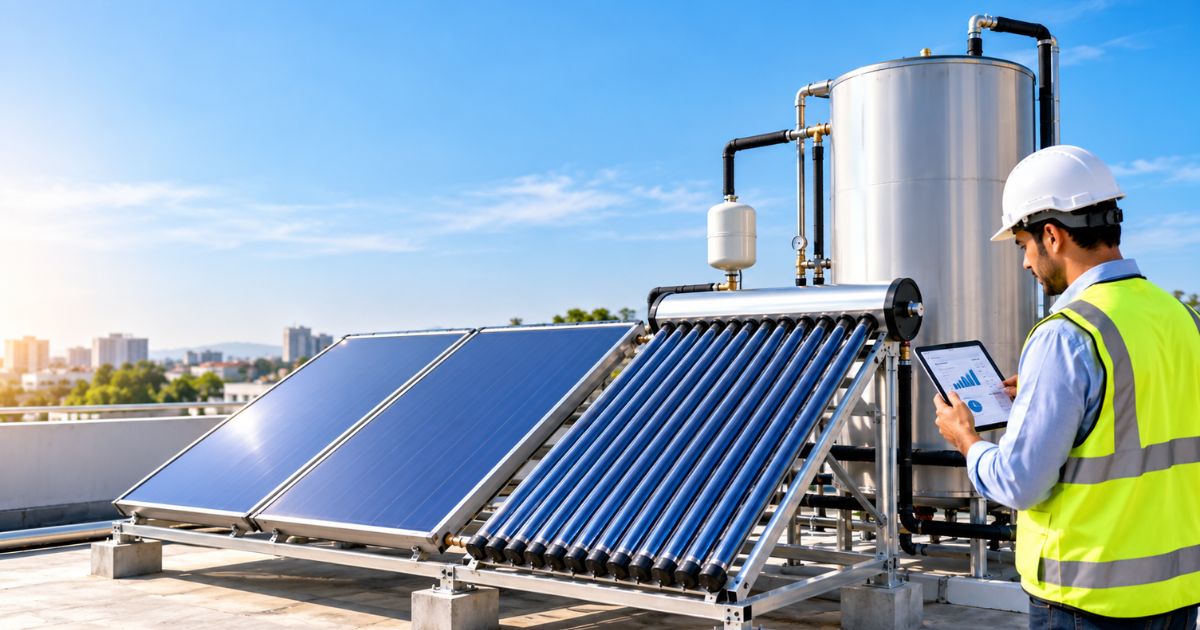
Solar water heaters help households, hotels, hospitals, factories and commercial buildings meet their hot water requirements by using solar energy instead of relying entirely on conventional heating systems. For manufacturers, importers and solar equipment brands, understanding energy-efficiency labelling and product compliance requirements is important before marketing these systems in India.
BEE Labelling for Solar Water Heaters helps eligible products communicate their energy-efficiency performance through the Bureau of Energy Efficiency's Standards and Labelling programme. The applicable requirements may involve system performance, testing, technical documentation and product certification, depending on the current regulatory framework.
Om Garuda Group provides compliance consultancy to businesses seeking guidance on BEE registration, product eligibility, applicable standards, testing documentation and the relevant application process. Our approach begins with understanding your product and identifying the requirements that apply to your particular solar water heating system.
What Is BEE Labelling for Solar Water Heaters?
The Bureau of Energy Efficiency (BEE), operating under the Ministry of Power, promotes energy conservation through standards, labelling and other efficiency initiatives. Its Standards and Labelling programme helps consumers compare eligible products based on their energy performance.
Solar water heaters use solar radiation to heat water for domestic, commercial or industrial applications. Their performance depends on factors such as collector design, solar radiation, water temperature, storage capacity, insulation and system configuration.
The BEE labelling framework for solar water heaters uses a star-rating system to communicate the performance of eligible products. The applicable rating criteria and testing requirements must be checked against the current programme schedule.
A BEE label should not be confused with a general product-quality certificate. It relates to the specified performance criteria under the applicable scheme, while other certification requirements may address product safety, materials or construction.
How Solar Water Heaters Work and Why Efficiency Matters
A solar water heating system typically consists of a solar collector, a water storage tank, connecting pipes and associated controls or circulation arrangements.
The collector absorbs solar energy and transfers heat to the water or heat-transfer fluid. The heated water is then stored in an insulated tank for use when required. In thermosyphon systems, circulation can occur naturally due to differences in fluid density. Other systems use pumps to circulate the fluid.
Two common collector technologies are:
- Flat-plate collectors: These generally use an absorber plate, transparent cover, insulation and an enclosure to capture and transfer solar heat.
- Evacuated-tube collectors: These use evacuated glass tubes to reduce heat loss and transfer solar energy to the system.
A system's performance cannot be judged solely by its collector type. Collector area, storage capacity, installation conditions, insulation, temperature requirements and the applicable test method also matter.
For manufacturers, energy-efficiency assessment helps establish how a system performs under defined conditions. For buyers, a reliable rating can support comparisons between eligible products when the same rating framework is used.
Which Solar Water Heater Products Need Compliance Assessment?
The correct compliance route depends on the product's design, capacity, construction and intended application.
Domestic solar water heaters: These systems supply hot water to homes and residential buildings. Assessment may cover collector performance, storage capacity, system configuration and relevant product standards.
Commercial solar water heating systems: Hotels, hospitals, hostels, restaurants and other facilities may require larger systems designed around higher daily hot water demand. Their design and application should be evaluated against the relevant technical requirements.
Flat-plate collector systems: Businesses manufacturing or supplying these products should identify the applicable Indian Standards and any relevant Quality Control Order requirements.
Evacuated-tube systems: These products may require assessment of the complete system as well as relevant components, including storage tanks and evacuated tubes, depending on the applicable standards.
Not every solar thermal product follows an identical certification process. Manufacturers and importers should confirm the relevant product category before applying for BEE labelling or BIS certification.
Uses Standards and Certification Requirements
Solar water heater compliance may involve different standards for collectors, complete systems, performance testing and construction. Relevant references published by MNRE include the following:
|
Standard |
General subject |
|
IS 12933 (Part 1):2003 |
Requirements for solar flat-plate collectors |
|
IS 12933 (Part 2):2003 |
Components of solar flat-plate collectors |
|
IS 16544:2016 |
All-glass evacuated-tube solar water heating systems |
|
IS 16542:2016 |
Storage tanks for all-glass evacuated-tube solar water heating systems |
|
IS 13129 (Part 1):2023 |
Performance rating using indoor test methods |
|
IS 13129 (Part 2):2023 |
System performance characterisation and yearly performance prediction |
|
IS 12976:2023 |
Code of practice for solar water heating systems |
These references help identify the relevant technical framework, but the applicable edition, amendments, certification scope and mandatory status must be confirmed before an application is submitted.
MNRE also lists the Solar Thermal Systems, Devices and Components (Quality Control) Order, 2024. The order identifies specified products and applicable Indian Standards. Businesses should verify the implementation provisions and current requirements for their exact product rather than assuming that every component follows the same route.
BEE labelling and BIS certification serve different purposes. BEE labelling communicates energy-efficiency performance under the relevant programme, whereas BIS certification addresses conformity with applicable Indian Standards where certification is required.
BEE Registration for Solar Water Heaters: Step-by-Step Process
Businesses seeking BEE Registration for Solar Water Heaters should first confirm the current programme requirements, registration procedure and eligibility conditions. The process may involve the following stages, depending on the applicable scheme.
Step 1: Product eligibility assessment
Review the system type, collector technology, rated capacity, manufacturer details and intended use to identify the applicable product category.
Step 2: Documentation preparation
Compile the product datasheet, model information, technical specifications, relevant certificates and available test reports.
Step 3: Testing and performance verification
Identify the applicable testing method and determine whether the existing evidence is sufficient or additional testing is required through a suitably recognised laboratory.
Step 4: Application and label-related formalities
Where the applicable BEE programme accepts applications, prepare the required submission and complete the prescribed registration and labelling formalities.
Step 5: Review and ongoing compliance
Address any requests for additional information and follow the relevant requirements for label display, model identification, renewals or subsequent verification, where applicable.
The exact steps and documentation depend on the current official procedure. Registration or label approval should not be promised before the relevant authority has completed its review.
BEE Certification Consultant for Solar Water Heaters
Manufacturers and importers often need help understanding which requirements apply to their products and how to prepare the necessary documentation. A BEE Certification Consultant for Solar Water Heaters can help clarify the compliance route before businesses commit to testing or application expenses.
Om Garuda Group provides guidance on product classification, applicable standards, technical documentation, testing requirements and registration-related procedures. Our consultancy focuses on helping businesses identify potential gaps and understand the next steps based on their product specifications.
We also help clients distinguish BEE labelling from BIS certification so that separate regulatory requirements are not treated as interchangeable.
BEE Registration Cost for Solar Water Heaters
The BEE Registration Cost for Solar Water Heaters depends on the applicable programme, current official fee schedule and work required for the product.
Potential cost components include:
- Official registration and application fees, where applicable
- Laboratory testing and performance evaluation
- Technical documentation preparation or review
- Product model assessment and related administrative work
- Professional consultancy charges
The final amount may vary depending on the number of models, the availability of valid test reports and whether additional testing or documentation is required.
Older BEE solar water heater schedules contain historical fee provisions and label-validity dates. These should not be used as current quotations without verification. Om Garuda Group can help identify the applicable cost components once your product details and the current registration route have been assessed.
Why Choose Om Garuda Group for Solar Water Heater Compliance?
Om Garuda Group supports businesses that need practical guidance on product compliance and regulatory documentation.
- Product-specific assessment: Identify the relevant requirements based on system design and product category.
- Technical documentation support: Review available specifications, certificates and test reports.
- Standards-related guidance: Understand which Indian Standards may apply to collectors, storage tanks and complete systems.
- Registration guidance: Understand the applicable application procedure and documentation requirements.
- Cost clarity: Identify likely testing, official fee and consultancy components before proceeding.
Our objective is to help manufacturers, importers and solar equipment brands make informed compliance decisions based on their products and the current regulatory framework.
Get Expert Guidance for Solar Water Heater BEE Compliance
Planning to manufacture, import or market solar water heaters in India? Contact Om Garuda Group to discuss your product category, applicable standards, testing requirements and BEE labelling eligibility.
Share your product specifications, collector type, storage capacity, existing certificates and available test reports. Our team can review the information and guide you towards the appropriate compliance assessment.
Contact Om Garuda Group for solar water heater compliance consultancy and registration guidance.