
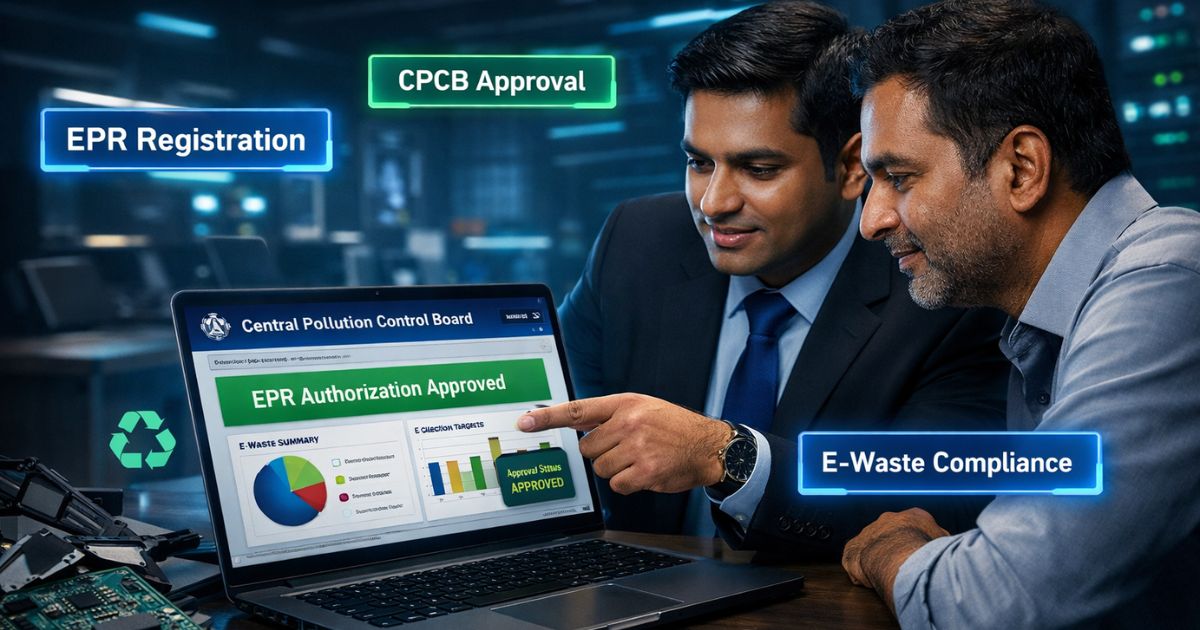
EPR registration for e-waste is a mandatory compliance requirement for businesses dealing in electrical and electronic equipment in India. If you manufacture, import, or sell electronics, you are legally responsible for managing the end-of-life disposal of your products.
Om Garuda Group provides complete support for EPR registration for e-waste, from documentation to approval and ongoing compliance. Our approach focuses on accuracy, regulatory alignment, and faster approvals through the Central Pollution Control Board portal.
What is EPR Registration for E-Waste?
Extended Producer Responsibility (EPR) is a regulatory framework under India’s E-Waste Management Rules that holds producers accountable for the collection and recycling of electronic waste generated from their products.
Under this system, businesses must obtain authorization from CPCB and meet defined recycling targets through authorized recyclers. The approval is commonly referred to as an EPR certificate, although technically it is an authorization issued by CPCB.
EPR registration for e-waste ensures that your business operates legally while contributing to environmentally responsible waste management.
Who Needs EPR Registration for E-Waste?
This compliance is not optional. If your business falls into any of the following categories, you are required to apply for EPR registration:
- Electronics manufacturers producing equipment in India
- Importers bringing electrical or electronic goods into India
- Brand owners selling products under their own label
- Online sellers listing electronic products on marketplaces
If you are searching for EPR registration e-waste manufacturer importer, you are already in the compliance bracket. Delaying registration can lead to penalties and operational restrictions.
Categories Covered Under EPR (PIBO)
EPR regulations classify businesses into three main categories:
Producer
Entities manufacturing electrical and electronic equipment.
Importer
Businesses importing electronic products or components.
Brand Owner
Companies selling products under their brand name, even if manufactured by a third party.
Each category has slightly different documentation and compliance requirements, which must be correctly identified before applying.
Step-by-Step CPCB EPR Registration Process
The process for CPCB EPR registration e-waste involves multiple stages. Missing even a small detail can lead to rejection or delays.
1. Business Assessment
Identify whether your entity qualifies as Producer, Importer, or Brand Owner.
2. Documentation Preparation
Collect and verify all required legal and operational documents.
3. CPCB Portal Registration
Create and submit your application through the CPCB EPR portal.
4. EPR Plan Submission
Define how you will meet recycling targets through authorized recyclers.
5. Application Review by CPCB
Authorities review your application and may raise queries.
6. Approval & Authorization
Once approved, you receive EPR authorization (certificate).
7. Post-Approval Compliance
Annual returns, recycling targets, and record maintenance.
Om Garuda Group handles this entire workflow, ensuring your application is technically correct and aligned with CPCB expectations.
Documents Required for EPR Registration
Proper documentation is one of the biggest failure points for applicants. You will typically need:
- GST Registration Certificate
- PAN Card of the company
- IEC Code (mandatory for importers)
- Company incorporation documents
- Product details with specifications
- Sales data and projections
- Agreement with authorized recycler
- Authorized signatory details
Incomplete or mismatched documents often result in rejection, which delays your compliance timeline.
EPR Certificate for E-Waste - What You Actually Get
There is a lot of confusion around the term “certificate”.
CPCB does not issue a generic certificate. It issues an EPR Authorization, which:
- Confirms your compliance with E-Waste Rules
- Defines your recycling obligations
- Allows legal sale and distribution of electronics
Businesses often search for an e-waste EPR certificate consultant because the process is not straightforward. Technical errors, incorrect category selection, or poor documentation can lead to rejection.
EPR Targets and Compliance Responsibilities
Getting approval is just step one. The real responsibility starts after that.
Under EPR registration for e-waste, you must:
- Meet annual recycling targets defined by CPCB
- Channel e-waste through authorized recyclers
- Maintain proper records of waste collection
- File annual returns on the CPCB portal
Failure to meet targets can result in penalties or suspension of authorization.
Timeline for EPR Registration
The timeline depends on how well your documentation is prepared.
- Standard processing time: 15 to 45 working days
- Delays occur due to:
- Incorrect documentation
- CPCB queries
- Incomplete EPR plans
A professionally handled application reduces approval time significantly.
Cost Factors for EPR Registration
There is no fixed price because the cost depends on:
- Type of business (manufacturer, importer, brand owner)
- Product category and volume
- Complexity of EPR plan
- Documentation readiness
Avoid agencies that promise unrealistic low pricing. Cheap services usually lead to rejection or compliance issues later.
Penalties for Non-Compliance
Ignoring EPR registration is not a small risk. Consequences include:
- Environmental compensation penalties
- Ban on selling products in India
- Marketplace delisting (Amazon, Flipkart)
- Legal action by regulatory authorities
If your business depends on electronics sales, non-compliance can directly impact revenue.
Why Choose Om Garuda Group for EPR Registration?
Most service providers just submit forms. That’s not enough.
Om Garuda Group focuses on end-to-end compliance, not just approval.
- Accurate classification of your business category
- Complete documentation support
- Proper EPR plan preparation
- Handling CPCB queries and follow-ups
- Post-approval compliance guidance
We don’t rely on guesswork. Every application is prepared based on current regulatory requirements.
Get Started with EPR Registration for E-Waste
If you are dealing with electronics and have not completed your EPR registration for e-waste, you are already exposed to compliance risk.
Om Garuda Group helps you move from confusion to approval with a structured, legally aligned process.
Talk to our experts today and get your CPCB EPR authorization without delays.