
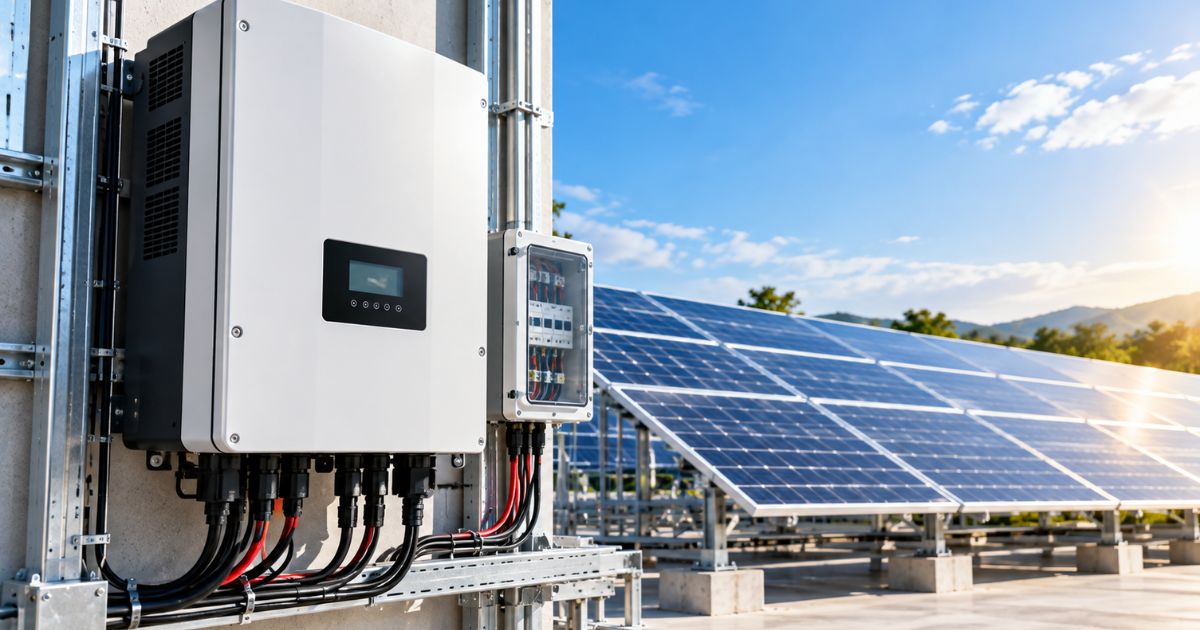
Solar photovoltaic (PV) inverter manufacturers, importers and suppliers must understand the applicable Indian quality, safety and certification requirements before placing products on the market or supplying them for regulated solar projects. MNRE Certification for Solar PV Inverters is a commonly used search term for businesses seeking guidance on solar inverter compliance, testing, BIS registration and government requirements.
The actual compliance route depends on the inverter's capacity, product specifications, manufacturing details and the latest applicable government notifications. MNRE quality-control orders and BIS certification requirements must be assessed according to the product and the provisions currently in force.
Om Garuda Group assists businesses with regulatory requirement assessment, documentation preparation, testing coordination and certification process guidance. Our objective is to help manufacturers and importers understand the appropriate compliance route before investing time and money in an application.
Understanding MNRE Approval for Solar PV Inverters
The Ministry of New and Renewable Energy (MNRE) publishes quality-control orders, technical guidelines and related notifications for solar photovoltaic systems, devices and components. These provisions establish requirements for relevant products, including solar PV inverters.
Businesses searching for MNRE Approval for Solar PV Inverters should first establish which order and certification procedure applies to their product. The requirements can depend on inverter capacity, the applicable Indian Standard, testing conditions and any active implementation extensions or exemptions.
A solar inverter converts the direct current (DC) generated by solar panels into alternating current (AC) for use by electrical equipment or connection to an electrical network. Depending on its design, it may also incorporate grid synchronisation, protection functions, monitoring, anti-islanding and power-control features. These functions make technical testing and safety compliance important parts of the assessment.
MNRE compliance should not be understood as a single universal certificate for every inverter. The applicable quality-control order, BIS registration or other prescribed compliance route must be identified for the specific product.
Is ALMM Registration Required for Solar Inverters?
ALMM Registration for Solar Inverters is a phrase businesses may use when searching for solar product approvals. However, manufacturers should not assume that the Approved List of Models and Manufacturers (ALMM) framework for solar PV modules and cells automatically applies to inverters.
MNRE maintains separate ALMM lists for solar PV modules and solar PV cells. These are different from the quality-control and certification requirements relevant to solar inverters. An inverter manufacturer should therefore establish whether its product is covered by the applicable solar systems quality-control order and related BIS requirements rather than applying module or cell enlistment procedures to the inverter.
Om Garuda Group can help businesses clarify this distinction and identify the compliance process relevant to their inverter model. The latest official notifications should always be checked before an application is initiated.
BIS Certification for Solar PV Inverters
BIS Certification for Solar PV Inverters is an important compliance area for manufacturers and importers supplying products covered by the applicable compulsory certification framework.
Bureau of Indian Standards (BIS) requirements are linked to notified product categories and the relevant Indian Standards. For solar PV inverters, the official BIS and MNRE resources identify standards that include:
- IS 16221 (Part 2): Safety requirements for power converters used in photovoltaic power systems, with particular requirements for inverters.
- IS 16169: Requirements relating to islanding prevention measures for utility-interconnected photovoltaic inverters.
- IS 16270: Test procedure for islanding prevention measures for utility-interconnected photovoltaic inverters.
The precise standard, edition, amendments and testing requirements must be confirmed for the inverter type and the applicable regulatory order. Not every standard applies identically to every model or operating configuration.
Why inverter testing matters
Technical evaluation helps establish whether an inverter meets the relevant safety and functional requirements. Depending on the applicable standard and product scope, assessment may cover electrical safety, protection against hazardous conditions, grid-interconnection behaviour and islanding prevention.
Anti-islanding is particularly important for grid-connected systems. It concerns the inverter's response when the utility supply is interrupted, helping prevent the system from continuing to energise an isolated part of the network under conditions where it should not.
Testing must follow the applicable procedure and be undertaken through a laboratory accepted for the relevant certification process. A test report alone should not be represented as a BIS licence or proof that every regulatory requirement has been completed.
Current Compliance Requirements and Capacity-Based Considerations
Solar inverter compliance rules can change through amendments, revised orders and implementation extensions. Manufacturers should check the latest official documents rather than relying exclusively on older consultant checklists or previously issued certificates.
MNRE's published resources include the Solar Systems, Devices and Components Goods Order, 2025, related testing guidelines and subsequent notifications. An official notification provides an implementation extension for solar PV inverters with a capacity above 200 kW, allowing self-certification up to 31 December 2026 or until further orders, whichever is earlier.
This is a specific, time-bound provision. It should not be interpreted as a general exemption for every inverter, capacity range or product category. Businesses must verify the exact scope and conditions of the current notification before deciding whether testing, BIS registration or self-certification applies.
A suitable compliance assessment should establish:
- The rated capacity and intended use of the inverter.
- Whether the product falls within the scope of the applicable quality-control order.
- The relevant Indian Standard and testing procedure.
- Whether a current self-certification provision or other exemption applies.
- The documents and evidence required for the relevant compliance route.
- Any implementation deadline or subsequent amendment affecting the product.
Documents Required for Solar Inverter Certification
The exact documentation depends on the applicable certification process, manufacturer location and product model. Preparing consistent records in advance can reduce avoidable queries during technical review.
Common preparation areas include:
- Business documentation: Company registration details, legal name, registered address and authorised signatory information.
- Manufacturing details: Factory address, manufacturing arrangements and relevant facility information.
- Product specifications: Inverter model number, rated capacity, electrical ratings and technical datasheet.
- Circuit and design information: Technical drawings, diagrams and other design records where required.
- Test reports: Reports prepared according to the applicable standard and accepted testing procedure.
- Quality-control records: Inspection procedures, production controls and product traceability information where applicable.
- Declarations and forms: Prescribed application forms, undertakings and manufacturer declarations.
- Existing approval records: Previous certificates, registrations or supporting documents where relevant to the application.
This is a general preparation checklist, not a definitive statutory document list. The current official procedure should determine which documents are mandatory for a particular inverter.
Step-by-Step Solar Inverter Certification Process
1. Identify the applicable compliance route
Review the product's capacity, design, manufacturer details and intended market. Determine which quality-control order, Indian Standard and certification procedure apply.
2. Review technical specifications
Check the model number, ratings, datasheet and design information for consistency. Differences between submitted documents can lead to clarification requests or additional work.
3. Determine testing requirements
Identify the applicable tests, standard editions and laboratory conditions. Confirm that the proposed testing facility is accepted for the relevant process before scheduling product testing.
4. Prepare the application documents
Compile the prescribed forms, technical records, business documents and test evidence. Confirm whether a BIS registration, self-certification procedure or another specified route applies.
5. Submit and address queries
Follow the applicable submission procedure and respond to requests for clarification with accurate, consistent information. Any changes to the product model or specifications should be assessed for their effect on the application.
6. Verify the final compliance status
After the relevant authority completes its process, verify the applicable registration, licence or other required documentation. Review its scope and conditions before marketing or supplying the product.
Solar Inverter Certification Services in India by Om Garuda Group
Om Garuda Group provides consulting support for businesses that need help understanding product compliance and preparing certification documentation. Our approach starts with a review of the product and the regulatory provisions that apply to it.
Our support may include:
- Regulatory assessment: Identifying relevant MNRE orders, BIS requirements and product-specific conditions.
- Documentation assistance: Reviewing application details and supporting technical records for completeness and consistency.
- Testing coordination: Helping businesses understand applicable testing requirements and laboratory documentation.
- BIS process guidance: Supporting preparation for the relevant registration or certification procedure where applicable.
- Application support: Assisting with document preparation and responses to regulatory queries.
- Compliance follow-up: Helping businesses review approval scope and monitor relevant regulatory updates.
Businesses seeking a Solar Inverter Certification Consultant in India, an MNRE Certification Consultant for Solar Inverters or a Solar Inverter BIS Registration Consultant should choose support that distinguishes applicable legal requirements from optional or project-specific requirements.
Om Garuda Group helps manufacturers and importers understand these distinctions and plan their compliance work. Certification decisions remain with the relevant authorities, and approval cannot be guaranteed by a consultant.
What Determines Solar PV Inverter Certification Cost?
The Solar PV Inverter Certification Cost varies according to the product and applicable compliance route. There is no single fee that can accurately cover every inverter model, manufacturer and regulatory situation.
The main cost components may include:
- Applicable government or BIS application fees.
- Laboratory testing and evaluation charges.
- Number of models or product variations included in the application.
- Technical documentation and review requirements.
- Additional testing or clarification work, if required.
- Consulting fees based on the scope of professional assistance.
Capacity and the applicable implementation provisions may also affect which process needs to be followed. Manufacturers should confirm the current official fee schedule and testing requirements before budgeting. Om Garuda Group can review the proposed scope and explain the likely cost components based on the available product information.
Get Solar Inverter Compliance Support from Om Garuda Group
Planning to launch or supply a solar PV inverter in India? Om Garuda Group can help you understand the applicable regulatory route, organise documentation and prepare for the relevant certification process.
Contact our team to discuss your inverter model, rated capacity and manufacturing details. We will help you identify the compliance requirements that apply to your product and the next steps to consider.