Launching or importing a medical device in India involves more than developing a quality product. Before a device can be legally manufactured, imported, or sold, it must be placed under the correct CDSCO Medical Device Classification. This classification determines the regulatory requirements, licensing process, documentation, and level of scrutiny your product must undergo.
Many manufacturers, importers, startups, and healthcare companies are unsure how to classify their products correctly. Selecting the wrong category can delay approvals, increase compliance costs, or even lead to regulatory action.
In this guide, we'll explain CDSCO Class A B C D Medical Devices, how the classification system works, and how you can determine the right category for your product under the Medical Devices Rules, 2017 Classification.
What Is CDSCO Medical Device Classification?
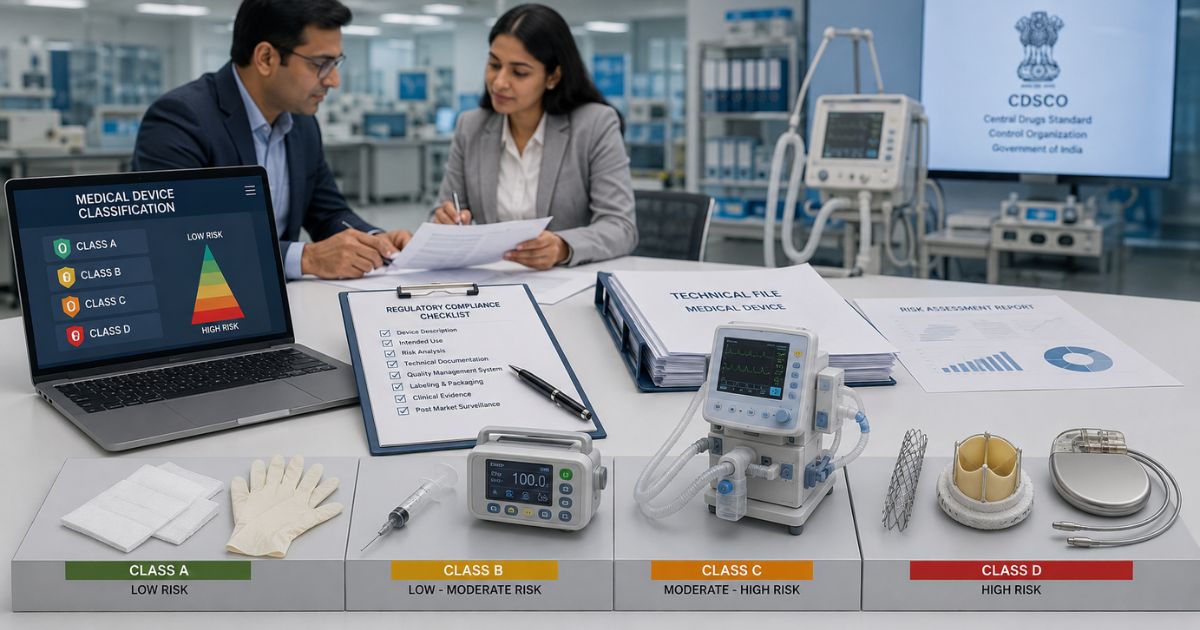
The CDSCO Medical Device Classification is a risk-based system established under the Medical Devices Rules, 2017 Classification. The Central Drugs Standard Control Organization (CDSCO) classifies every regulated medical device into one of four risk categories:
- Class A – Low Risk
- Class B – Low-Moderate Risk
- Class C – Moderate-High Risk
- Class D – High Risk
This Medical Device Classification in India ensures that regulatory controls are proportional to the potential risks associated with using the device. Generally, the higher the risk to patients or users, the stricter the regulatory requirements become.
Why Is Medical Device Classification Important?
Correct classification affects every stage of compliance. It determines:
- Licensing requirements
- Documentation and technical file requirements
- Clinical evidence expectations
- Quality Management System requirements
- Regulatory review process
- Post-market surveillance obligations
Choosing the wrong category can result in rejected applications, unnecessary delays, or additional compliance costs. Therefore, understanding How to Classify Medical Devices in India is essential before applying for CDSCO Medical Device Registration.
Understanding CDSCO Medical Device Classes
The CDSCO Medical Device Classes are based primarily on the level of risk posed by the device, its intended use, duration of contact with the human body, degree of invasiveness, and whether it is active or non-active.
Class A Medical Devices (Low Risk)
Class A devices present minimal risk to patients and users. These products usually have simple designs and do not support or sustain life.
Examples include:
- Surgical dressings
- Examination gloves
- Tongue depressors
- Basic hospital furniture with medical use
Although Class A devices follow the simplest regulatory pathway among Class A Class B Class C Class D Medical Devices, manufacturers must still comply with applicable quality standards and regulatory requirements.
Class B Medical Devices (Low to Moderate Risk)
Class B devices involve a slightly higher level of risk and generally require greater regulatory oversight.
Examples include:
- Hypodermic needles
- Suction equipment
- Infusion pumps
- Dental devices
Manufacturers must maintain appropriate quality systems and provide supporting documentation during CDSCO Medical Device Registration.
Class C Medical Devices (Moderate to High Risk)
Class C devices may directly affect patient health and therefore require comprehensive regulatory evaluation.
Examples include:
- Ventilators
- Bone fixation implants
- Dialysis equipment
- Orthopedic implants
These products generally require more extensive technical documentation, risk management reports, and evidence demonstrating safety and performance.
Class D Medical Devices (High Risk)
Class D devices pose the highest level of risk because they often support or sustain life or are critical for patient survival.
Examples include:
- Heart valves
- Implantable pacemakers
- HIV diagnostic kits
- Coronary stents
These devices undergo the highest level of regulatory assessment before approval under Medical Device Classification in India.
How to Classify Medical Devices in India
Many businesses ask How to Classify Medical Devices in India because the process involves more than simply reviewing product specifications.
CDSCO considers several important factors:
- Intended medical purpose
- Duration of patient contact
- Degree of invasiveness
- Whether the device is implantable
- Whether the device is active or powered
- Whether it delivers medicinal substances
- Potential risk to patients if the device fails
Manufacturers should carefully review the classification rules provided under the Medical Devices Rules, 2017 before determining the appropriate class.
Medical Device Risk Classification in India
The Medical Device Risk Classification in India follows internationally accepted risk-based regulatory principles.
In general:
|
Device Class |
Risk Level |
Regulatory Control |
|
Class A |
Low |
Basic regulatory controls |
|
Class B |
Low-Moderate |
Moderate regulatory review |
|
Class C |
Moderate-High |
Enhanced technical assessment |
|
Class D |
High |
Comprehensive regulatory evaluation |
As the risk level increases, documentation, quality assurance, and regulatory scrutiny also become more extensive.
Documents Required for CDSCO Medical Device Registration
While documentation varies depending on the device category, businesses typically require:
- Device description
- Intended use statement
- Risk analysis report
- Quality Management System documentation
- ISO 13485 certification (where applicable)
- Technical file
- Labeling information
- Manufacturing details
- Performance and safety data
Preparing complete documentation significantly improves the chances of obtaining CDSCO Medical Device Registration without unnecessary delays.
Common Mistakes During Medical Device Classification
Many applicants encounter delays because of avoidable errors, such as:
- Selecting the wrong device class
- Misinterpreting intended use
- Providing incomplete technical documentation
- Ignoring applicable classification rules
- Submitting outdated regulatory information
- Failing to maintain quality management documentation
These issues can delay approvals and increase compliance costs.
How Om Garuda Group Can Help
Determining the correct CDSCO Medical Device Classification can be challenging, especially for innovative or technologically advanced products. An experienced CDSCO Consultant for Medical Device Registration can help manufacturers avoid classification errors and ensure regulatory compliance.
At Om Garuda Group, we assist manufacturers, importers, and healthcare companies with:
- Medical device classification support
- Regulatory strategy
- Documentation preparation
- CDSCO application filing
- Import and manufacturing license assistance
- End-to-end regulatory compliance guidance
Our team works closely with clients to simplify the approval process while ensuring compliance with the latest Indian medical device regulations.
Conclusion
Understanding CDSCO Medical Device Classification is the first and most important step before manufacturing or importing a medical device in India. Whether your product falls under Class A, B, C, or D, choosing the correct classification ensures smoother regulatory approvals, better compliance, and faster market entry.
If you are uncertain about your product's classification or need assistance with CDSCO Medical Device Registration, professional guidance can help you avoid costly mistakes and streamline the approval process. With the right regulatory approach and expert support from Om Garuda Group, businesses can confidently navigate India's medical device regulatory framework and bring compliant products to market efficiently.