
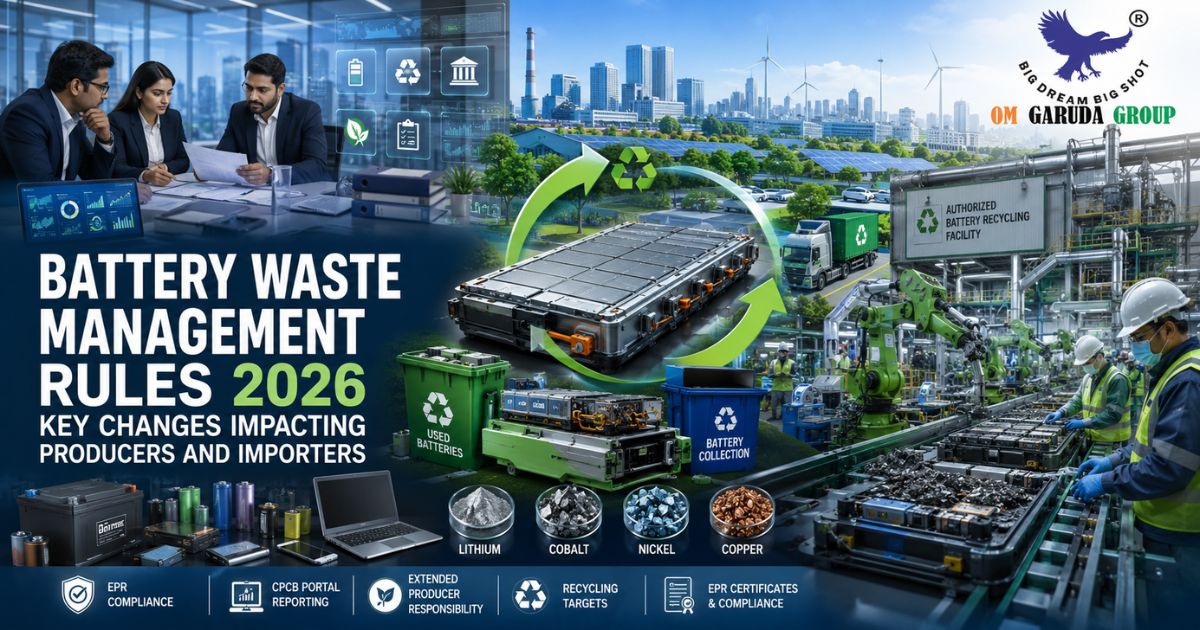
As India's electric mobility, consumer electronics, renewable energy storage, and battery-powered device sectors continue to expand, regulatory compliance surrounding battery waste managewment has become increasingly important. To address environmental concerns and promote a circular economy, the Government of India has strengthened the regulatory framework governing battery waste through the Battery Waste Management Rules, 2022 and subsequent amendments and implementation updates introduced through 2026.
For Producers, Importers, Brand Owners (PIBOs), manufacturers, recyclers, and refurbishers, understanding these developments is critical to maintaining compliance and avoiding regulatory penalties.
This article explores the key changes impacting businesses in 2026, compliance obligations, EPR registration requirements, and how organizations can effectively meet their environmental responsibilities.
Understanding Battery Waste Management Rules
The Battery Waste Management Rules, 2022 were notified by the Ministry of Environment, Forest and Climate Change (MoEFCC) to establish a comprehensive framework for the environmentally sound management of waste batteries.
The rules apply to batteries placed on the Indian market, including:
- Portable Batteries
- Automotive Batteries
- Industrial Batteries
- Electric Vehicle (EV) Batteries
The regulations are based on the principle of Extended Producer Responsibility (EPR), making producers responsible for collecting and ensuring environmentally sound recycling or refurbishment of batteries after their end-of-life stage.
Who Must Comply with Battery Waste Management Rules?
The regulations apply to several categories of stakeholders.
Producers
Entities that manufacture and sell batteries under their own brand.
Importers
Businesses importing batteries or battery-containing equipment into India.
Brand Owners
Companies selling batteries under their brand name, irrespective of manufacturing source.
Manufacturers
Organizations involved in battery production activities.
Recyclers
Authorized facilities engaged in battery recycling operations.
Refurbishers
Entities involved in repairing or extending battery life before recycling.
For most businesses importing electronic products, EV batteries, energy storage systems, or battery-operated equipment, EPR registration is mandatory.
Why Battery EPR Compliance is Important in 2026
India's battery ecosystem is witnessing rapid growth due to:
- Electric Vehicles (EVs)
- Consumer Electronics
- Solar Energy Storage Systems
- Telecommunications Infrastructure
- Industrial Automation
This growth has increased the volume of battery waste generated annually.
To ensure responsible disposal and resource recovery, regulatory authorities have strengthened monitoring mechanisms through the Central Pollution Control Board (CPCB) EPR Portal.
Businesses failing to comply may face:
- Environmental Compensation Charges
- Regulatory Notices
- Suspension of EPR Registration
- Restrictions on Business Operations
- Reputational Damage
As enforcement activities increase, proactive compliance has become essential.
Key Changes Impacting Producers and Importers in 2026
1. Strengthened CPCB EPR Portal Compliance Requirements
One of the most significant developments has been the continued enhancement of the CPCB online portal for battery EPR compliance.
The portal serves as the central compliance platform for:
- EPR Registration
- Annual Returns
- Battery Sales Reporting
- Recycling Target Monitoring
- EPR Certificate Management
Producers and importers are now expected to maintain accurate and timely reporting of battery quantities introduced into the Indian market.
Failure to update data accurately may result in compliance discrepancies and regulatory scrutiny.
2. Increased Focus on Extended Producer Responsibility Targets
Under the Battery Waste Management framework, producers must fulfill prescribed EPR obligations based on the quantity of batteries placed in the market.
Authorities have increased monitoring of:
- Collection Targets
- Recycling Obligations
- EPR Certificate Procurement
- Waste Battery Traceability
Businesses are expected to establish mechanisms for meeting their annual recycling responsibilities through authorized recyclers.
3. Enhanced Monitoring of Importers
Importers of batteries and battery-operated products are receiving greater regulatory attention.
Products commonly impacted include:
- Mobile Phones
- Laptops
- Tablets
- Smart Watches
- Power Banks
- UPS Systems
- Energy Storage Systems
- Electric Vehicle Components
Importers must ensure that EPR registration is obtained before placing products on the Indian market.
Failure to comply may affect import operations and future regulatory approvals.
4. Greater Transparency Through EPR Certificate Mechanism
The Battery Waste Management Rules introduced an EPR Certificate trading mechanism.
Under this system:
- Authorized recyclers generate EPR Certificates based on recycling activities.
- Producers and importers purchase certificates to meet their EPR obligations.
- Compliance is digitally tracked through the CPCB portal.
This framework promotes accountability while supporting the growth of India's formal recycling ecosystem.
5. Focus on Circular Economy and Resource Recovery
Recent regulatory initiatives emphasize:
- Recovery of valuable metals
- Sustainable battery disposal
- Reduction of landfill waste
- Development of recycling infrastructure
Organizations are encouraged to integrate sustainability goals into their compliance strategies.
The objective extends beyond regulatory compliance to fostering a circular economy for battery materials.
EPR Registration for Battery Importers and Producers
Obtaining EPR Registration is one of the most important compliance requirements under the Battery Waste Management Rules.
Who Requires EPR Registration?
- Battery Importers
- Battery Manufacturers
- Brand Owners
- EV Battery Producers
- Consumer Electronics Importers
- Energy Storage System Suppliers
Without valid EPR registration, businesses may face restrictions on market operations.
Documents Required for Battery EPR Registration
While documentation may vary depending on business structure, typical requirements include:
- Company Incorporation Documents
- PAN Card
- GST Registration
- IEC Certificate (for importers)
- Authorized Signatory Details
- Product and Battery Information
- Sales and Import Data
- Environmental Compliance Declarations
Accurate documentation significantly improves approval timelines.
Common Compliance Challenges Faced by Businesses
Many organizations struggle with:
Product Classification Issues
Determining applicable battery categories and reporting requirements.
Incorrect Sales Reporting
Inaccurate quantity declarations often lead to compliance gaps.
EPR Target Planning
Failure to estimate future recycling obligations.
Portal Management Challenges
Difficulties in maintaining accurate records on the CPCB portal.
Multi-Regulatory Compliance
Battery-powered products often require:
- EPR Registration
- BIS Certification
- ETA Approval
- LMPC Registration
Coordinating multiple compliance requirements can be complex.
Penalties for Non-Compliance
Regulatory authorities have strengthened enforcement under environmental regulations.
Non-compliance may result in:
- Environmental Compensation Charges
- Regulatory Action by CPCB
- Suspension of Registration
- Legal Proceedings
- Market Access Restrictions
Organizations should implement internal compliance systems to reduce regulatory risks.
Best Practices for Battery Waste Compliance in 2026
To maintain compliance, businesses should:
✔ Obtain EPR Registration before product launch
✔ Maintain accurate sales and import records
✔ Monitor annual EPR obligations
✔ Partner with authorized recyclers
✔ Conduct regular compliance audits
✔ Ensure timely portal reporting
✔ Track EPR certificate requirements
✔ Stay updated on CPCB notifications
A proactive compliance approach significantly reduces business risks.
How Om Garuda Group Helps with Battery EPR Compliance
Battery waste compliance involves technical regulations, environmental obligations, reporting requirements, and ongoing regulatory monitoring. Navigating these requirements can be challenging, particularly for importers and multinational companies entering the Indian market.
At Om Garuda Group, we provide end-to-end EPR Registration and Battery Waste Management compliance solutions.
Our services include:
- Battery EPR Registration
- CPCB Portal Registration
- Compliance Assessment and Gap Analysis
- Documentation Preparation
- Annual Return Support
- EPR Target Planning
- Authorized Recycler Coordination
- Environmental Compliance Advisory
- BIS + EPR + ETA + LMPC Compliance Integration
With over 6 years of regulatory consulting experience and more than 1000 successful compliance projects, we help businesses achieve regulatory compliance efficiently while minimizing operational risks.
Need Battery EPR Registration for Your Products?
Whether you are importing batteries, manufacturing battery-powered products, supplying energy storage systems, or launching EV-related products in India, Om Garuda Group can help you navigate the complete EPR compliance process.
Contact Om Garuda Group today for expert Battery EPR Registration, CPCB Compliance, BIS Certification, ETA Approval, and LMPC Registration services.