
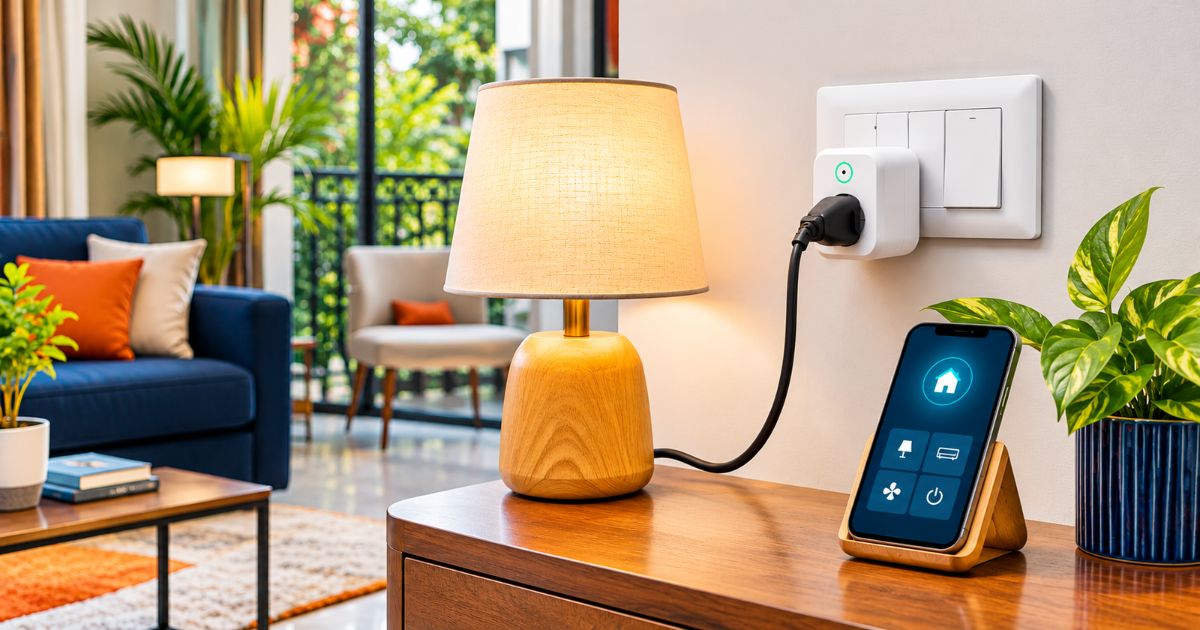
Smart plugs, Wi-Fi switches, connected sockets, and other home automation devices are changing how people control electrical appliances. Users can switch devices on or off through mobile apps, set schedules, and manage appliances remotely. As demand for these products grows in India, manufacturers and importers must pay close attention to electrical safety and product compliance.
A common question is whether smart plugs and home automation devices require BIS certification before they can be sold in India. The answer depends on the product's construction, electrical function and applicable Quality Control Order (QCO). A smart plug is not automatically covered under the BIS Compulsory Registration Scheme (CRS) simply because it uses Wi-Fi or Bluetooth.
Understanding the applicable Indian Standard is important before manufacturing, importing or marketing these products. This guide explains the relevant BIS requirements, the role of IS 1293, electrical appliance safety rules and the separate approval considerations for wireless functionality.
Is BIS Certification Mandatory for Smart Plugs in India?
BIS certification for smart plugs depends on how the product is classified under the applicable Indian Standards and government notifications.
A smart plug generally connects an electrical appliance to a power socket and allows the user to control the power supply electronically. Its design may include a plug, socket outlet, relay, control circuit, wireless module and protective components.
Two regulatory considerations are particularly important:
- Plugs and socket-outlets: IS 1293:2019 covers household and similar plugs and socket-outlets rated up to 250 volts and 16 amperes. These products are covered under mandatory BIS certification through the Scheme I licensing route.
- Electrical appliance safety: The Safety of Household, Commercial and Similar Electrical Appliances Quality Control Order covers electrical appliances within its scope, subject to its exclusions and applicable implementation provisions. BIS identifies IS 302 (Part 1):2024 as the revised general safety standard.
A complete smart plug must therefore be assessed according to its product classification. Certification of an individual plug or socket component does not automatically establish compliance of the complete electronic product.
BIS+3
Understanding IS 1293 for Smart Plugs
IS 1293 for smart plugs is relevant when the product includes a plug or socket-outlet falling within the scope of this standard.
IS 1293:2019 specifies requirements for household and similar plugs and socket-outlets with rated voltage up to and including 250 V and rated current up to and including 16 A. It addresses construction and electrical safety characteristics intended to reduce risks during normal use.
Some important areas covered by the standard include:
- Protection against electric shock
- Insulation and electrical strength
- Temperature rise during operation
- Mechanical strength and durability
- Plug pin and socket contact construction
- Earthing arrangements, where applicable
- Marking and product identification
The BIS product manual also defines the licence scope through characteristics such as rated current, rated voltage, earthing, mounting and connection methods. Manufacturers should check the applicable product configuration instead of assuming that every smart socket has the same certification scope.
BIS+1
BIS Requirements for Smart Plugs in India
The BIS requirements for smart plugs in India should be reviewed at both the component and complete-product levels. A smart plug may contain several electrical and electronic parts, and each can affect the applicable compliance assessment.
For example, the plug pins and socket contacts must meet relevant electrical safety requirements. The switching mechanism must safely handle the rated load. The enclosure must provide suitable protection against heat and accidental contact, while the internal circuit must be designed to prevent electrical hazards.
Manufacturers should examine:
- Rated voltage and current of the product
- Type of plug and socket configuration
- Earthing and insulation arrangements
- Switching and relay ratings
- Protection against overheating and short circuits
- Enclosure material and resistance to heat
- Product markings and user instructions
The applicable standard and testing programme must be confirmed for the actual product. Do not assume that an IS 1293 certificate for a plug component alone covers the complete smart plug.
BIS Certification for Home Automation Products
Home automation includes a wide range of products, such as smart switches, connected sockets, smart relays, dimmers, controllers and automated lighting systems. These products do not all follow one common BIS standard.
BIS certification for home automation products depends on the product's primary function and the relevant mandatory certification notification.
For instance, a smart switch may need assessment under the applicable switch or electrical appliance requirements. A smart speaker has a different regulatory classification and is specifically listed under the CRS. A connected lighting controller may also have requirements linked to its intended use and product category.
The BIS compulsory certification lists distinguish between products covered under Scheme I and those covered under Scheme II. Manufacturers should check the relevant list and QCO before deciding which certification route applies.
Bureau of Indian Standards+2
Smart Plug Safety Standards in India
Smart plug safety standards in India focus on protecting users, connected appliances and electrical installations. Wireless control does not reduce the need for electrical safety. In fact, smart plugs introduce additional design considerations because electronic switching circuits operate alongside mains voltage.
The relevant assessment may consider insulation, temperature rise, abnormal operation, mechanical strength, electrical connections and protection against electric shock. The relay or switching element must also be suitable for the load the manufacturer declares.
A smart plug rated for a particular current should not be marketed as suitable for appliances that exceed its rating. Manufacturers should clearly state electrical ratings, operating conditions and usage limitations in product documentation.
Does IS 302 Apply to Smart Plugs and Smart Switches?
IS 302 (Part 1) is the general safety standard for household and similar electrical appliances. The Safety of Household, Commercial and Similar Electrical Appliances QCO provides for mandatory BIS certification of electrical appliances within its scope, while excluding products already covered by other QCOs or mandatory BIS requirements.
The revised IS 302 (Part 1):2024 is based on IEC 60335-1:2020. BIS has issued implementation guidance for this standard, and the government has subsequently amended the QCO framework. Therefore, manufacturers should check the current QCO, product scope and applicable transition provisions before selecting the certification route.
BIS+2
BIS Certification for Wireless Home Automation Devices
BIS certification for wireless home automation devices and wireless equipment approval are two separate compliance considerations.
Smart plugs and switches may use Wi-Fi, Bluetooth or other radio technologies to communicate with mobile applications and home networks. Depending on the frequency band and device configuration, the wireless function may require Equipment Type Approval (ETA) from the Wireless Planning and Coordination (WPC) Wing of the Department of Telecommunications.
WPC ETA for eligible devices operating in licence-exempt frequency bands can be obtained through the prescribed self-declaration process. The required supporting information may include an RF test report, technical literature and manufacturer authorisation for an Indian representative.
WPC approval does not replace BIS certification, and BIS certification does not automatically satisfy WPC requirements. Manufacturers and importers should assess both independently.
Department of Telecom eServices Portal
BIS Certification Process for Smart Plugs and Smart Switches
The certification route depends on the product category. Where mandatory BIS certification applies, manufacturers generally need to follow these steps:
- Product classification: Identify the product's function, electrical ratings, construction and intended use.
- Standard identification: Confirm the applicable Indian Standard and whether the product falls under Scheme I, Scheme II or a specific QCO.
- Product testing: Arrange testing through the appropriate BIS-recognised laboratory.
- Document preparation: Compile technical specifications, factory details, brand information and required declarations.
- Application submission: Submit the application through the relevant BIS process with the prescribed documents and fees.
- BIS assessment: Respond to any queries or additional requirements raised during evaluation.
- Certification and marking: Use the relevant BIS Standard Mark only after obtaining the required approval and in accordance with its conditions.
Documents Required for BIS Compliance
The documentation depends on the product and certification scheme. Manufacturers may need to prepare:
- Company and manufacturing unit registration details
- Factory address and authorised contact information
- Product specifications and electrical ratings
- Circuit diagrams and component details, where required
- Product photographs and labels
- Brand ownership or authorisation documents
- Test reports from an appropriate recognised laboratory
- Quality control and manufacturing information
- Authorisation documents for an Indian representative, where applicable
Incomplete technical information or incorrect product classification can delay the compliance process.
How Om Garuda Group Can Help
Navigating BIS compliance requirements for smart electrical products can be challenging when a product combines electrical components, electronic controls and wireless connectivity.
Om Garuda Group helps manufacturers, importers and brand owners understand applicable certification requirements, identify relevant standards, prepare documentation and coordinate the compliance process. A product-specific assessment is the right starting point, particularly when the device may fall under more than one regulatory framework.
Before launching a smart plug or home automation product in India, businesses should verify the latest BIS notifications and WPC requirements applicable to their exact product configuration.