
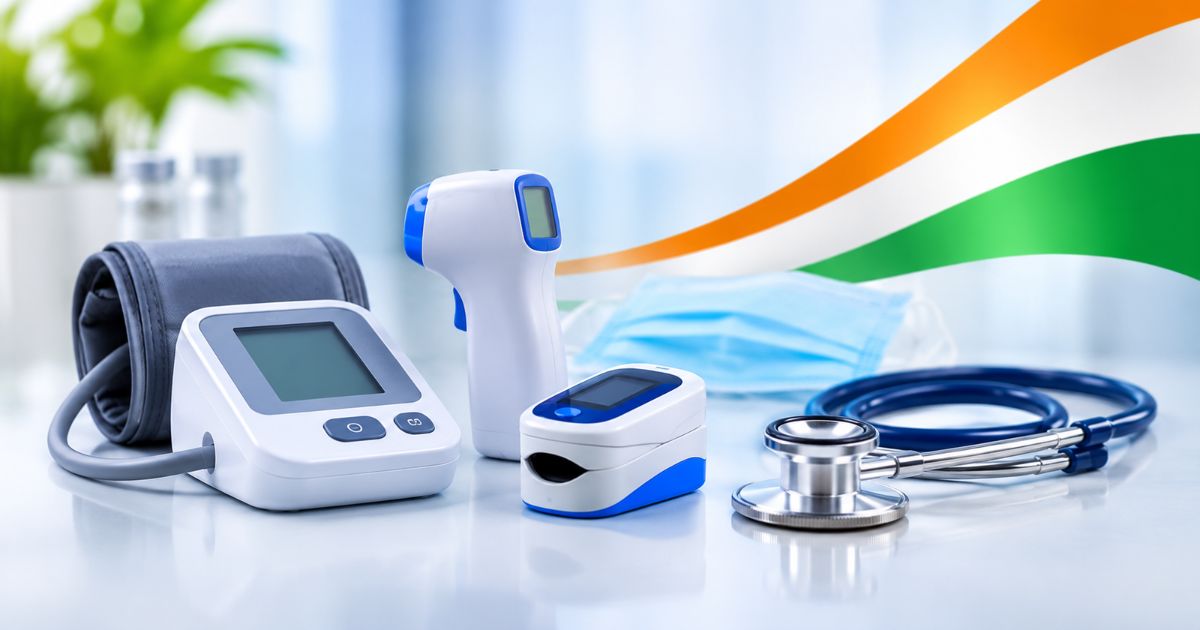
Medical devices entering the Indian market must meet regulatory requirements that go beyond product quality and safety. Their packaging, labelling, manufacturing details, traceability information, and regulatory approvals also need careful attention. Manufacturers and importers must understand which declarations are required, where they should appear, and which registrations or licences apply to their business activities.
The compliance framework primarily involves the Medical Devices Rules, 2017, administered under the Drugs and Cosmetics Act, 1940, and the Legal Metrology Act, 2009. Both frameworks address different regulatory responsibilities, which can create confusion for businesses involved in manufacturing, importing, packing, and distributing medical devices.
Recent amendments have also clarified how medical device packaging declarations should be handled under Legal Metrology regulations. Understanding these changes is particularly important for businesses planning to introduce new products or update existing packaging.
This guide explains Legal Metrology compliance for medical devices, including applicable labelling requirements, mandatory declarations, manufacturer and importer responsibilities, and registration considerations in India.
Understanding Legal Metrology Compliance for Medical Devices in India
Legal Metrology is the regulatory framework governing weights, measurements, and declarations on packaged commodities. The Legal Metrology Act, 2009, and the Legal Metrology (Packaged Commodities) Rules, 2011, establish requirements intended to protect consumers against incorrect quantity declarations, misleading packaging information and other packaging-related discrepancies.
Medical devices have an additional regulatory framework because their labelling must communicate information relevant to product identification, intended use, safety, storage and traceability.
The Medical Devices Rules, 2017, specifically address these requirements under Rule 44. This means medical device manufacturers and importers must pay attention to the product-specific requirements rather than treating medical devices like ordinary packaged consumer goods.
The Legal Metrology rules for medical devices also need to be understood in light of the amendment notified in October 2025. The amendment clarified that declarations on packages containing medical devices and the applicable height and width of letters and numerals for those declarations are governed by the Medical Devices Rules, 2017.
eGazette+1
Medical Device Labelling Requirements in India Under Rule 44
Correct labelling helps healthcare professionals, distributors and users identify a medical device and understand how it should be handled. Rule 44 of the Medical Devices Rules, 2017, specifies the information that must appear on medical device labels.
These particulars must be printed in indelible ink on the label, shelf pack, outer cover and every outer covering in which the device is packed.
The medical device labelling requirements in India include the following declarations:
|
Required information |
What it communicates |
|
Name of the medical device |
Identifies the product |
|
Device identification and intended use details |
Helps users understand the device and its purpose |
|
Manufacturer name and address |
Identifies the manufacturer and actual manufacturing premises |
|
Net quantity |
Declares weight, measure, volume or number of units in the metric system |
|
Manufacturing and expiry details |
Indicates the manufacturing month and year and expiry or shelf life, where applicable |
|
Medicinal or biological substance information |
Indicates the presence of such substances wherever required |
|
Batch or lot number |
Supports product identification and traceability |
|
Storage and handling conditions |
Communicates applicable storage requirements |
|
Sterility information |
Identifies sterile products and the sterilisation method |
|
Warnings and precautions |
Highlights relevant safety instructions |
|
Single-use information |
Identifies devices intended for single use |
|
Manufacturing licence number |
Provides the applicable licence number for domestically manufactured devices |
Some requirements have specific exceptions. For example, expiry dates may not be necessary for certain non-sterile devices made from stable materials such as stainless steel or titanium, or for medical equipment, instruments and apparatus. Sterile devices may use the sterilisation date as the manufacturing date under the specified conditions.
Manufacturers should therefore assess the nature, classification and intended use of each device before finalising its packaging. Applying a single generic label format to every medical device can result in missing or inaccurate declarations.
CDSCO+1
What Changed Under the Legal Metrology Amendment Rules, 2025?
One important development for medical device businesses was the notification of the Legal Metrology (Packaged Commodities) Amendment Rules, 2025, through G.S.R. 778(E), dated 23 October 2025.
The amendment introduced specific provisions for packages containing medical devices.
Its key changes include:
- Declarations on packaging: The Medical Devices Rules, 2017, apply to declarations on packages containing medical devices.
- Height of letters and numerals: The applicable requirements under the Medical Devices Rules, 2017, govern the height of letters and numerals used for declarations.
- Width of letters and numerals: The Medical Devices Rules, 2017, also govern the width of letters and numerals used for declarations.
- Rule 33 relaxation: The amendment specifies that the relaxation under Rule 33 of the Packaged Commodities Rules does not apply where the Medical Devices Rules, 2017, are applicable.
The amendment came into force on the date of publication in the Official Gazette.
eGazette+1
This clarification reduces the earlier uncertainty around applying general packaged commodity declaration and typography requirements to medical device packaging.
Manufacturers should not interpret this amendment as a complete exemption from every provision of the Legal Metrology Act or all other applicable regulatory obligations. Its scope concerns the specified packaging declarations and related requirements.
Mandatory Declarations on Medical Device Packaging
Packaging is an important part of medical device compliance because it carries information that helps users identify the product, verify its quantity and understand relevant safety instructions.
The mandatory declarations on medical device packaging should be reviewed against Rule 44 rather than copied directly from the general declaration checklist used for ordinary packaged commodities.
Manufacturers should pay particular attention to the following areas:
- Product identification
The product name and information needed to identify the device and its intended use must be clearly provided. The description should match the product documentation and applicable regulatory approvals.
- Quantity and measurement
The label must specify the correct net quantity using the applicable metric units. The declared quantity should accurately represent the number of devices, weight, volume or measurement, as relevant.
- Manufacturing and expiry information
Manufacturing and expiry details must be provided as applicable. The rules also specify how expiry dates should be expressed and identify circumstances where an expiry date may not be necessary.
- Safety and storage information
Where relevant, packaging must communicate storage conditions, handling instructions, warnings, precautions and sterilisation details.
- Traceability information
A distinctive batch or lot number is required. This information helps manufacturers and distributors trace products in case of quality complaints, recalls or other safety concerns.
A practical packaging review should compare the physical label against the approved product information, manufacturing records and applicable regulatory requirements.
Legal Metrology Registration for Medical Devices: What Manufacturers Should Know
Registration is another area where medical device businesses need to distinguish between different regulatory frameworks.
The term Legal Metrology registration for medical devices is often used broadly, but businesses should not confuse registration under Legal Metrology with a manufacturing or import licence under the Medical Devices Rules, 2017.
Rule 27 of the Legal Metrology (Packaged Commodities) Rules, 2011, addresses registration of manufacturers, packers and importers who pre-pack or import commodities for sale, distribution or delivery. It provides for registration with the Director or Controller of Legal Metrology and specifies the relevant application particulars and procedure.
At the same time, the October 2025 amendment specifically changed the provisions governing declarations on medical device packages. It did not expressly delete Rule 27.
Therefore, businesses should not assume that the amendment automatically removes every Legal Metrology registration obligation for medical device manufacturers, packers or importers. The applicability of Rule 27 should be assessed separately, considering the product, business activity and relevant regulatory interpretation.
Indian Kanoon+1
Difference Between Legal Metrology Registration and Medical Device Licensing
These registrations and licences serve different purposes.
|
Particulars |
Legal Metrology |
Medical Devices Rules, 2017 |
|
Main purpose |
Regulation of packaged commodity declarations and related metrology requirements |
Regulation of medical device manufacturing, import and distribution |
|
Regulatory authority |
Director or Controller of Legal Metrology, as applicable |
Central or State Licensing Authority, depending on the activity |
|
Relevant provisions |
Legal Metrology Act, 2009, and Packaged Commodities Rules, 2011 |
Medical Devices Rules, 2017 |
|
Main focus |
Packaging, declarations and applicable registration requirements |
Product safety, quality, licensing and regulatory compliance |
A company may have obligations under both frameworks. Obtaining one registration or licence should not be treated as automatic approval under the other.
Medical Device Manufacturer Registration Requirements in India
Manufacturers must evaluate their obligations before commencing production or placing medical devices in the Indian market.
The medical device manufacturer registration requirements in India primarily arise under the Medical Devices Rules, 2017, which establish licensing requirements according to the classification of medical devices and the nature of manufacturing activities.
Medical devices are classified into four categories:
- Class A: Low-risk medical devices.
- Class B: Low-moderate-risk medical devices.
- Class C: Moderate-high-risk medical devices.
- Class D: High-risk medical devices.
Under the licensing framework, State Licensing Authorities handle the manufacture of Class A and Class B devices, while the Central Licensing Authority handles Class C and Class D manufacturing.
Manufacturers generally need to assess the following requirements:
- Correct classification of the medical device.
- Applicable manufacturing licence or registration requirements.
- Compliance with relevant quality management system requirements.
- Product safety and performance documentation.
- Manufacturing premises and technical documentation.
- Labelling and packaging compliance under Rule 44.
Class A non-sterile and non-measuring devices have a specific registration route under the applicable provisions. Other classes and categories follow their respective licensing requirements.
The applicable licence or registration route should be confirmed before manufacturing or commercial distribution begins.
CDSCO+1
Labelling Requirements for Imported Medical Devices in India
Importers have additional responsibilities because products manufactured outside India must carry the information required for their distribution in the Indian market.
The labelling requirements for imported medical devices in India are specifically addressed under Rule 44(n) of the Medical Devices Rules, 2017.
Where the required information is not already printed, the importer can provide the India-specific details through stickering.
The required information includes:
- Import licence number.
- Name and address of the importer.
- Address of the actual manufacturing premises.
- Date of manufacture.
This provision allows importers to incorporate the required Indian regulatory information without necessarily requiring the overseas manufacturer to print every India-specific detail on the original packaging.
For example, if a medical device arrives from Germany with its original manufacturer details and product information, but the Indian importer details and import licence number are missing, the importer can add the required information through appropriate stickers.
However, the sticker must provide accurate information and should not obscure important product details, safety instructions, batch identification or expiry information.
The CDSCO has also clarified through its medical device import FAQs that importers can affix these India-specific details by stickering when they are not already printed on the label.
CDSCO+1
Medical Device Importer Labelling Responsibilities
Importers should establish a label verification process before releasing products into the Indian market.
A practical review should include:
- Verification of the import licence number against the applicable licence.
- Confirmation of the importer's legal name and address.
- Verification of the actual manufacturing premises.
- Checking manufacturing dates and other applicable shelf-life information.
- Confirmation that the original label and additional sticker information are consistent.
- Review of the label against Rule 44 and the applicable product documentation.
Importers should also ensure that the imported product has the appropriate regulatory authorisation under the Medical Devices Rules, 2017. Correcting packaging information does not replace the requirement to obtain an applicable import licence.
Common Compliance Mistakes Medical Device Businesses Should Avoid
Even businesses with established manufacturing and import operations can face compliance problems because of incorrect or incomplete packaging information.
Some common mistakes include:
Using generic packaging templates: Applying ordinary packaged commodity declarations without reviewing the specific medical device labelling provisions can result in regulatory inconsistencies.
Incorrect manufacturer information: The manufacturing address on the label should identify the actual premises where the device was manufactured.
Missing import details: Imported devices may be missing the import licence number, importer address or actual manufacturing premises.
Incorrect expiry declarations: Manufacturers must follow the applicable requirements for expiry dates and shelf life rather than using a standard format without checking the product category.
Confusing regulatory registrations: Legal Metrology registration, medical device manufacturing licences and import licences are separate regulatory matters.
Ignoring regulatory amendments: Businesses that continue using outdated packaging templates may overlook changes introduced through subsequent notifications.
A periodic compliance review can help identify these issues before products reach distributors, hospitals or end users.
How Om Garuda Group Can Help With Regulatory Compliance
Understanding the regulatory framework is only one part of maintaining compliance. Businesses must also identify the applicable provisions, review product documentation, verify packaging declarations and determine which registrations or licences are relevant to their operations.
Om Garuda Group supports businesses with regulatory compliance and certification-related requirements. Its team can help manufacturers, importers and brand owners understand the applicable compliance framework and identify the documentation and regulatory steps relevant to their products.
Businesses planning to manufacture, import or distribute medical devices should review their regulatory position before introducing products into the market.
Contact Om Garuda Group to discuss your medical device compliance requirements and understand the applicable regulatory process.
Frequently Asked Questions
1. Does Legal Metrology apply to medical devices in India?
Medical devices are subject to the Medical Devices Rules, 2017, for their specific labelling declarations. The Legal Metrology (Packaged Commodities) Amendment Rules, 2025, clarified that the Medical Devices Rules govern declarations and the relevant letter and numeral dimensions for medical device packages. Other Legal Metrology obligations should be assessed separately.
2. What are the mandatory labelling requirements for medical devices in India?
Rule 44 requires information such as the device name, intended use details, manufacturer information, net quantity, manufacturing and expiry details where applicable, batch number, storage conditions, sterilisation information, warnings and applicable licence details.
3. Is Legal Metrology registration mandatory for medical device manufacturers?
Rule 27 of the Legal Metrology (Packaged Commodities) Rules, 2011, addresses registration of manufacturers, packers and importers involved in pre-packing or importing commodities for sale, distribution or delivery. Its applicability to a particular medical device business should be evaluated separately from the Medical Devices Rules licensing requirements.
4. Can Indian importers add stickers to imported medical device packaging?
Yes. Under Rule 44(n), importers can use stickers to provide specified India-specific information when it is not already printed. This includes the import licence number, importer name and address, actual manufacturing premises address and manufacturing date.
5. What is the difference between Legal Metrology registration and a medical device manufacturing licence?
Legal Metrology registration relates to applicable packaged commodity and metrology requirements, while a medical device manufacturing licence authorises manufacturing activities under the Medical Devices Rules, 2017. They are separate regulatory requirements and serve different purposes.