
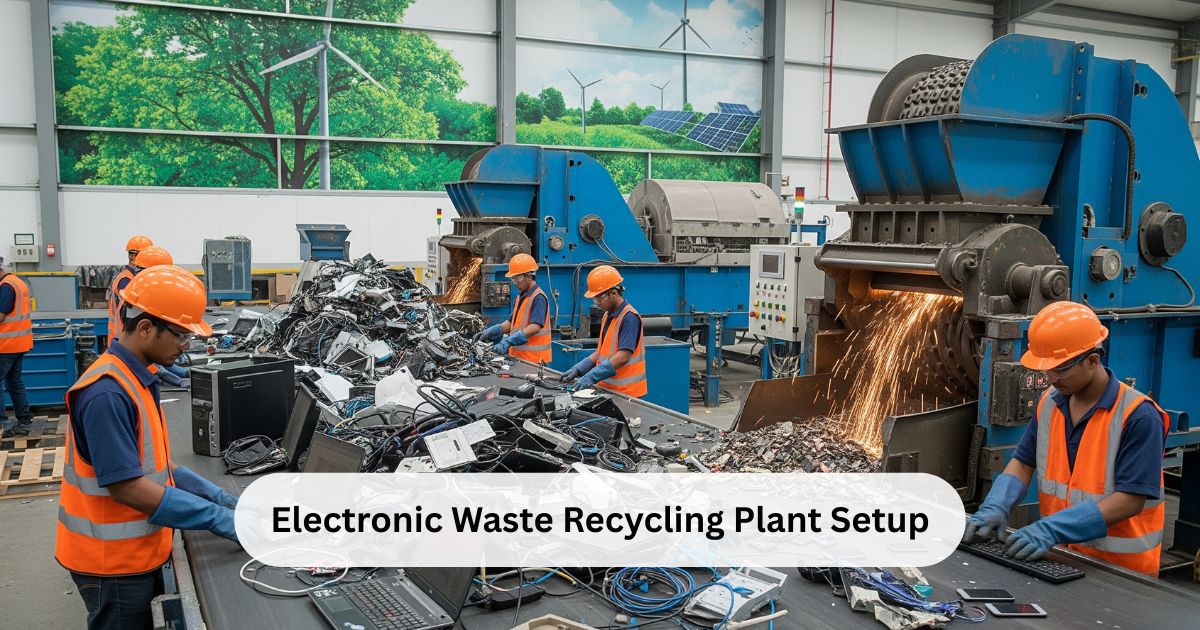
India generates millions of tonnes of discarded electronics every year due to rapid urbanization, rising gadget use, and fast technology upgrades, managing this e-waste has become a serious concern, demanding structured recycling solutions to prevent environmental hazards. Businesses & entrepreneurs are now exploring opportunities to build recycling plants that can handle this challenge responsibly.
Setting Up a Recycler Plant for Electronic Waste is not only a profitable venture but also a way to contribute to sustainable practices. This step-by-step guide explains how an Electronic Waste Recycling Plant Setup can be planned and executed in India, covering regulations, infrastructure, machinery, and safety requirements in detail.
Why Start an Electronic Waste Recycling Plant?
- Growing Market Demand – India is the third-largest e-waste generator in the world. The demand for safe recycling plants is continuously increasing.
- Regulatory Support – The Government of India has introduced strict rules under E-Waste Management Rules 2016 & its amendments, promoting formal recycling setups.
- Profitability – Metals like gold, silver, copper & rare earth elements are recovered during recycling, making the business profitable.
- Environmental Protection – Helps reduce pollution & prevents harmful chemicals from contaminating soil and water.
Step 1: Market Research & Feasibility Study
Before Setting Up a Recycler Plant for Electronic Waste, conduct detailed research:
- Estimate e-waste availability in your target region (Delhi NCR, Mumbai, Bengaluru, Hyderabad, etc.).
- Study competitors and existing recycling plants.
- Identify potential clients such as manufacturers, IT companies, government agencies, and bulk consumers.
- Calculate ROI, operational cost, and expected profit margins.
Step 2: Business Plan & Funding
An effective business plan is the backbone of any Electronic Waste Recycling Plant Setup. Your plan should include:
- Project Cost Estimation – Land, machinery, licensing, staff, and working capital.
- Funding Options – Bank loans, private investors, subsidies & government schemes.
- Revenue Model – Collection of e-waste, dismantling, metal recovery & resale.
Step 3: Location & Infrastructure
- Select land as per local zoning & environmental clearance norms.
- Minimum land requirement: 500–2000 sq. meters (depends on plant capacity).
- Proper ventilation, drainage, and waste disposal systems.
- Storage facilities for segregated e-waste components.
Step 4: Licensing & Compliance
For Setting Up a Recycler Plant for Electronic Waste, multiple licenses are required:
- CPCB Authorization – Central Pollution Control Board approval.
- SPCB Consent – State Pollution Control Board permission.
- Company Incorporation – Register as Pvt. Ltd / LLP / Partnership.
- GST Registration – For tax compliance.
- EPR Authorization – Extended Producer Responsibility compliance if working with producers & OEMs.
Step 5: Machinery & Technology
Selection of machinery plays a vital role in Electronic Waste Recycling Plant Setup. Basic machinery includes:
- Dismantling Tools & Conveyor Belts – For dismantling electronic items.
- Shredders & Crushers – For breaking down components.
- Magnetic & Eddy Current Separators – For metal separation.
- Dust & Fume Control Units – For safe operations.
- Refining Units – For precious metal recovery.
Step 6: Manpower & Training
Running a recycling plant requires skilled staff:
- Plant Manager & Supervisors
- Skilled Labor for dismantling & segregation
- Engineers & Technicians
- Safety & Compliance Officers
- Administrative & Sales Team
Training is mandatory for handling hazardous materials safely.
Step 7: Collection Network
For efficient Setting Up a Recycler Plant for Electronic Waste, strong collection channels are needed:
- Tie-ups with schools, colleges, IT parks & offices.
- Collaboration with e-waste collection centers.
- Door-to-door pickup services in metro cities.
- Partnerships with government bodies under EPR programs.
Step 8: Recycling Process
- Collection & Storage – Gather e-waste in designated warehouses.
- Sorting & Dismantling – Segregate devices like mobiles, computers, TVs, printers, etc.
- Shredding & Crushing – Break down components for material recovery.
- Separation – Use mechanical & chemical processes to separate plastics, metals & glass.
- Metal Recovery – Extract copper, aluminum, silver, gold & rare earth metals.
- Safe Disposal – Non-recyclable materials disposed in compliance with CPCB norms.
Step 9: Safety Measures
- Provide protective gear to workers.
- Install proper ventilation & dust control.
- Maintain emergency response systems.
- Regular training for handling hazardous substances.
Step 10: Marketing & Business Development
- Promote services through Om Garuda Group official website.
- Collaborate with electronics manufacturers for bulk contracts.
- Build trust with corporates by offering compliance certificates.
- Use digital marketing, SEO & trade fairs for visibility.
Investment & Profitability Estimate
For a medium-scale Electronic Waste Recycling Plant Setup, investment may range between ₹50 lakhs – ₹2 crores depending on technology & location. Profitability depends on:
- Quantity of e-waste collected.
- Recovery of valuable metals.
- Long-term contracts with IT companies & manufacturers.
Average ROI is estimated between 25–40% within 2–3 years.
Challenges in Setting Up a Recycler Plant
- Lack of awareness among consumers about e-waste recycling.
- Competition from informal recycling sector.
- High initial capital investment.
- Constant need for regulatory compliance.
Conclusion
Setting Up a Recycler Plant for Electronic Waste in India is a profitable & sustainable venture when executed with the right planning and compliance. With proper research, modern machinery, and government approvals, an Electronic Waste Recycling Plant Setup can help manage the growing e-waste challenge effectively. Om Garuda Group provides expert consultation, licensing assistance & end-to-end support for entrepreneurs looking to establish such facilities.
Need help with Setting Up a Recycler Plant for Electronic Waste? Contact Om Garuda Group today and get professional assistance for your Electronic Waste Recycling Plant Setup.