
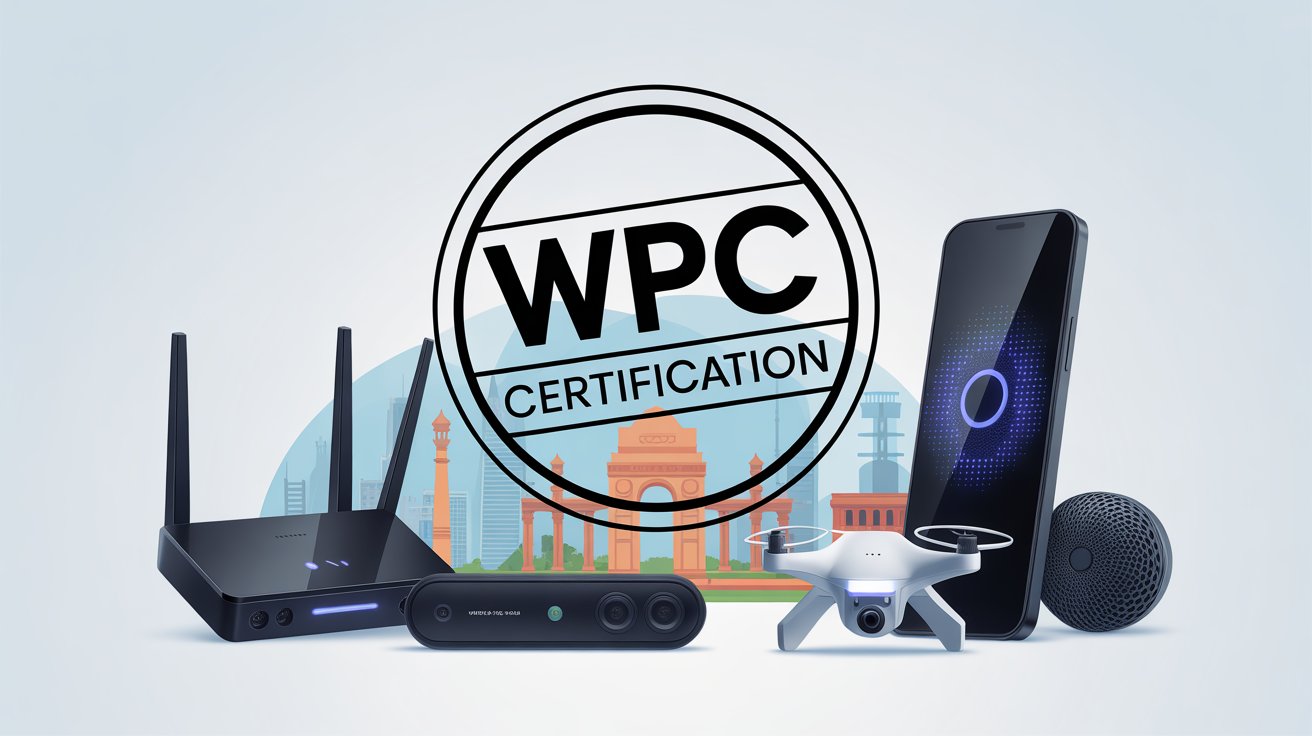
For manufacturers, importers & traders dealing with wireless and telecom products, obtaining WPC Certification in Delhi is a mandatory compliance step. The Wireless Planning and Coordination (WPC) Wing, under the Department of Telecommunications (DoT), regulates the use of radio frequencies & certifies wireless equipment to ensure they meet Indian standards.
What is WPC Certification?
WPC Certification in Delhi is an official approval granted by the WPC Wing for products that use radio frequency, Bluetooth, Wi-Fi, RFID, or other wireless technologies. Without this certification, such products cannot be legally sold or imported into the Indian market and for businesses in Delhi, this certification assures smooth import clearances and legal operations across India.
Why is WPC Registration in Delhi Required?
WPC Registration in Delhi confirms that wireless products comply with Indian frequency and safety regulations. Products like mobile phones, Wi-Fi routers, drones, Bluetooth speakers, and RFID devices all need this clearance. Importers & manufacturers face penalties, confiscation, or delays in customs if they attempt to operate without it.
Types of WPC Certification
WPC grants certification under multiple categories depending on usage:
- ETA (Equipment Type Approval) - for products using de-licensed frequency bands.
- Import License - required for importing wireless products not exempted under ETA.
- Dealer Possession License (DPL) & Non-Dealer Possession License (NDPL) - for entities storing or dealing in wireless equipment.
Each category of WPC Certification in Delhi has different procedures & documentation requirements.
Eligibility for WPC Certification
The following entities can apply:
- Indian manufacturers producing wireless products.
- Importers or authorized Indian representatives of foreign manufacturers.
- Traders or dealers applying for possession licenses.
Foreign companies without an Indian presence must appoint a local representative for WPC Registration in Delhi.
Process of WPC Certification
The certification process involves:
- Identify Product Category – Confirm if the device requires ETA, Import License, or another license type.
- Application Submission – Apply online through the WPC portal.
- Testing & Compliance – Get RF test reports from accredited labs (in case of ETA).
- Document Upload – Submit business & product-related documents.
- Review & Grant – WPC evaluates the application and issues the certificate/license.
For most wireless products under ETA, WPC Certification in Delhi can be obtained within 4–6 weeks, depending on documentation & test report accuracy.
Required Documents for WPC Registration in Delhi
Applicants must submit:
- Company Incorporation Certificate or Business License
- Import Export Code (IEC) certificate for importers
- Product technical details (user manual, datasheet, RF specifications)
- RF Test Report from accredited laboratory
- ID & address proof of authorized signatory
- Authorization letter (if applicant is a representative)
Accurate & complete documents help speed up the process of WPC Registration in Delhi.
Benefits of WPC Certification in Delhi
- Legal approval to import, sell & use wireless products
- Faster customs clearance for imports
- Compliance with Indian telecom regulations
- Improved business credibility
- Wider acceptance across telecom & electronic markets
Cost of WPC Certification in Delhi
The cost depends on the type of license, product testing charges, and government fees. On average, businesses spend ₹25,000–₹50,000 for ETA certification, though charges vary with product specifications.
Renewal of WPC Registration in Delhi
WPC approvals like ETA generally do not require renewal, but licenses such as DPL or NDPL must be renewed periodically. Renewal involves submission of updated documents & prescribed fees.
Conclusion
Obtaining WPC Certification in Delhi is an essential requirement for businesses dealing with wireless and telecom products. With correct documentation, compliance testing, and proper guidance, the process of WPC Registration in Delhi can be completed smoothly, ensuring legal operations and uninterrupted market access.